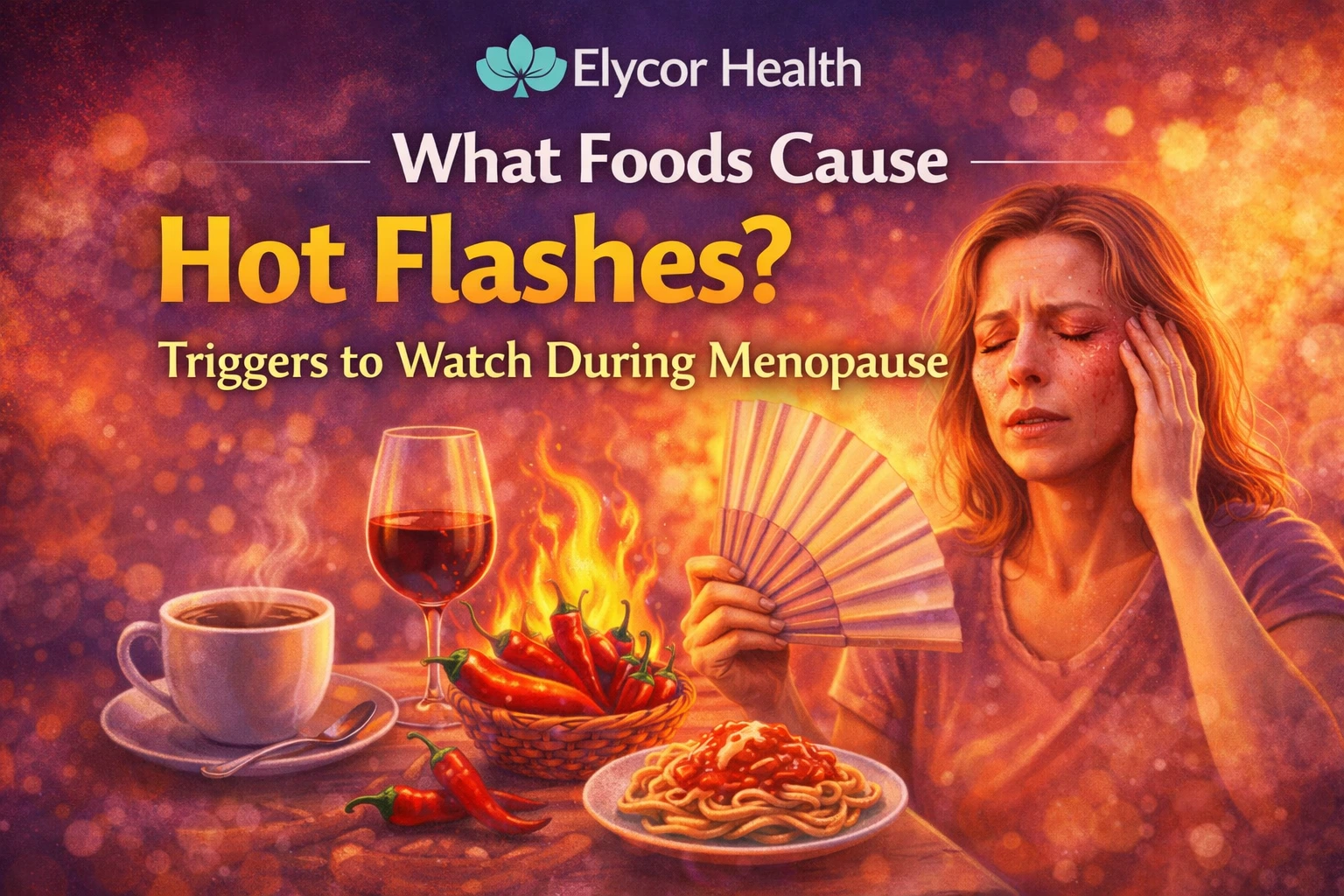
You had a cup of coffee at 11 in the morning. By 11:15, you were fanning yourself at your desk.
You ate a spicy curry for dinner. An hour later, you were lying on top of the covers, wide awake and sweating.
You had a glass of wine to wind down. And instead of relaxing, your face turned red and the heat crept up your neck.
If any of this sounds familiar, you have already started noticing something important. What you eat and drink can directly influence how often and how intensely you experience hot flashes.
This does not mean food is the cause of hot flashes. The root cause is hormonal. But certain foods act as triggers. They push an already sensitive system over the edge. Understanding which foods do this, and why, gives you a practical tool to reduce hot flash frequency without waiting for your hormones to sort themselves out.
Why Can Food Trigger Hot Flashes?
During perimenopause and menopause, the hypothalamus, the brain’s temperature regulation centre, becomes hypersensitive due to declining estrogen levels. It is already sitting close to its trigger threshold. Anything that raises body temperature, stimulates the nervous system, or spikes blood sugar can be enough to push it over that edge.
Think of it like a smoke detector with a very sensitive sensor. A little bit of smoke, something that would not bother a standard detector, sets it off. Your hypothalamus during menopause works the same way. Small internal shifts that your body handled effortlessly before can now trigger a full heat response.
Certain foods create exactly these kinds of internal shifts. They raise circulation, stimulate sweat glands, spike blood glucose, or activate the nervous system. In a body that is already hormonally unstable, these effects are amplified.
Why Some Women Get Hot Flashes Specifically After Eating
Some women notice that hot flashes tend to arrive shortly after a meal, even when the food itself is not an obvious trigger like spice or caffeine. There is a reason for this.
Digestion is metabolically active work. When you eat, your body increases blood flow to the digestive system, raises core temperature slightly, and accelerates metabolism to process the food. For most people, most of the time, this is completely imperceptible. But for a woman with a sensitised hypothalamus, even this mild internal temperature rise can be enough to trigger a hot flash response.
Larger meals create a stronger effect than smaller ones. This is why many women find that eating smaller, more frequent meals reduces post-meal hot flashes more than any other dietary change. The metabolic spike is simply smaller.
Common Foods That Trigger Hot Flashes
Caffeine
Caffeine is one of the most consistently reported dietary triggers for hot flashes. It stimulates the central nervous system, raises heart rate, and increases body temperature. For a system that is already prone to misfiring, this stimulation can be the push that sets off a hot flash.
The effect is not limited to coffee. Strong tea, energy drinks, and even chocolate contain enough caffeine to be relevant for women who are sensitive to it.
The important word here is sensitive. Not every woman reacts to caffeine the same way. Some find that their morning coffee has no noticeable effect on hot flash frequency. Others find that eliminating caffeine after midday makes a significant difference. This is why identifying your personal triggers, which we will come to later, matters more than following a generic list.
Spicy Foods
Spicy foods raise body temperature directly. The active compound in chilli peppers, capsaicin, binds to the same receptors in the body that respond to heat. When you eat something spicy, your body genuinely reads it as a heat signal and responds accordingly. It increases circulation, activates sweat glands, and widens blood vessels near the skin surface.
For a woman whose hypothalamus is already primed to overreact to heat signals, a spicy meal is a fairly reliable trigger. Many women find that reducing spicy food in the evenings, in particular, helps with night sweats significantly.
Sugar and Refined Carbohydrates
This one is less obvious but equally important. When you eat sugary foods or refined carbohydrates, your blood glucose rises rapidly. This spike triggers a hormonal response, including a release of insulin and a cascade of secondary effects that can include increased body temperature and a stimulation of the sympathetic nervous system.
For women in perimenopause and menopause, this blood sugar spike can directly trigger a hot flash. The effect is often noticed after desserts, sugary drinks, white bread, or heavily processed snacks.
Stable blood sugar is one of the quieter but more powerful regulators of hot flash frequency. Women who eat in a way that keeps blood glucose steady, through whole foods, adequate protein, and fibre, often notice a meaningful reduction in episodes over time.
Alcohol
Alcohol is a vasodilator. It widens blood vessels, increases blood flow to the skin surface, and raises skin temperature. This is why people flush when they drink. For a woman prone to hot flashes, this vascular response can trigger a full hot flash episode within minutes of having a drink.
Wine is the most commonly reported trigger, but cocktails, spirits, and beer can all have the same effect. The timing tends to be quick. Many women notice flushing and heat within 15 to 20 minutes of their first drink.
Beyond the immediate trigger effect, alcohol also disrupts sleep architecture in the second half of the night, which worsens night sweats and increases the following day’s hormonal volatility. The impact compounds.
Highly Processed Foods
Packaged snacks, fried foods, and processed meats tend to be high in refined carbohydrates, unhealthy fats, sodium, and additives. None of these support hormonal balance. They contribute to inflammation, blood sugar instability, and weight gain, all of which are associated with more frequent and more severe hot flashes.
Processed foods are not a direct trigger in the same way that caffeine or spice are. But a diet high in processed foods creates the internal conditions that make the hypothalamus more reactive over time. They make the underlying problem worse.
Foods That May Help Reduce Hot Flashes
Just as some foods trigger hot flashes, others may help dampen them. These work by supporting hormonal balance, reducing inflammation, and keeping blood sugar stable.
Soy products such as tofu, edamame, soy milk, and tempeh contain isoflavones, plant compounds with a mild estrogen-like effect in the body. Several studies suggest that regular soy consumption may reduce hot flash frequency, particularly in women who do not already eat soy regularly. The effect is modest but real for many women.
Flaxseeds are rich in lignans, another class of phytoestrogens. Ground flaxseed added to yoghurt, porridge, or a smoothie each day is a simple way to incorporate this. They also support digestive health, which has its own indirect hormonal benefits.
Whole grains such as oats, brown rice, quinoa, and whole wheat keep blood glucose stable. Stable blood glucose means fewer hormonal spikes, which means fewer hot flash triggers. This is one of the most practical dietary shifts a woman can make during this phase.
Fruits and vegetables, particularly those rich in antioxidants, help reduce oxidative stress and inflammation. Berries, leafy greens, broccoli, and colourful vegetables all fall into this category. They support the broader hormonal and metabolic environment that hot flash frequency depends on.
Nuts and seeds provide healthy fats, magnesium, and vitamin E. Almonds, walnuts, sunflower seeds, and pumpkin seeds are all worth including regularly. Magnesium in particular supports nervous system calm and sleep quality, both of which indirectly reduce hot flash frequency.
Drinks That May Help
Water is the most important. Dehydration worsens temperature sensitivity and makes the body’s cooling mechanisms less efficient. Drinking adequate water throughout the day, and keeping a cold glass nearby during episodes, is a practical and underappreciated tool.
Herbal teas such as chamomile, peppermint, and red clover tea are popular among women managing hot flashes. Peppermint in particular has a natural cooling effect. Chamomile supports relaxation and sleep. Red clover contains isoflavones, similar to soy.
Green tea contains less caffeine than coffee and provides antioxidants that support overall hormonal health. Many women find it a useful replacement for coffee, particularly in the afternoon.
A Menopause-Friendly Diet at a Glance
You do not need a complicated meal plan. The pattern that most consistently supports hormonal health during menopause is straightforward:
- Eat mostly whole, minimally processed foods
- Include lean protein at every meal to support blood sugar stability and muscle maintenance
- Prioritise healthy fats from olive oil, avocado, nuts, and fatty fish
- Fill half your plate with vegetables at lunch and dinner
- Eat smaller, more frequent meals rather than large ones that spike metabolism sharply
- Limit caffeine, alcohol, sugar, and spicy foods, particularly in the evening
This is not about perfection or restriction. It is about creating an internal environment that is less reactive, more stable, and better equipped to move through this transition with fewer disruptions.
How to Identify Your Personal Food Triggers
The triggers listed above are the most common. But every woman is different. What reliably sets off a hot flash in one woman may have no effect in another.
The most effective way to identify your personal triggers is to keep a simple food and symptom journal for two to three weeks. You do not need an app or a complicated system. A notebook works fine.
Write down what you eat and drink, roughly what time, and note when hot flashes occur, how intense they were, and what was happening around the time. After two weeks, patterns usually become visible. You might notice that hot flashes cluster after coffee, or that evenings when you have a drink are reliably worse. You might find that spicy food at dinner always precedes a night sweat.
This kind of personal data is more useful than any generic food list. It tells you specifically where your leverage points are.
Other Factors That Make Hot Flashes Worse
Food is one piece of the puzzle, but it works alongside other triggers. Hot flashes are also worsened by:
- Stress and anxiety, which activate the sympathetic nervous system
- Hot or humid weather, which adds external heat to an already sensitive system
- Poor sleep, which increases hormonal volatility the following day
- Tight or synthetic clothing, which traps heat and reduces the skin’s ability to cool itself
- Smoking, which is consistently associated with more frequent and more severe vasomotor symptoms
Managing food triggers alongside these broader factors gives you the most complete picture of what is driving your symptoms and where you can make changes.
When to Talk to a Doctor
Dietary changes can make a meaningful difference for mild to moderate hot flashes. But there are situations where a medical conversation is important:
- Hot flashes are severe, frequent, and significantly disrupting sleep or daily life
- Dietary and lifestyle changes have not provided any noticeable improvement after several weeks
- You want to explore whether hormone therapy or non-hormonal medications might be appropriate for your situation
You do not need to manage this entirely on your own. A doctor who understands menopause can help you build a more complete plan.
Key Takeaways
- Certain foods trigger hot flashes by raising body temperature, stimulating the nervous system, or spiking blood sugar in a system that is already hormonally sensitised
- The most common dietary triggers are caffeine, spicy foods, sugar and refined carbohydrates, alcohol, and highly processed foods
- Foods that support hormonal balance and blood sugar stability, including soy, flaxseeds, whole grains, fruits, and vegetables, may help reduce hot flash frequency over time
- Eating smaller meals, staying hydrated, and limiting trigger foods in the evening can produce noticeable improvements
- Keeping a food and symptom journal for two to three weeks is the most reliable way to identify your personal triggers
- Diet is one part of the picture. Managing stress, sleep, and other lifestyle factors alongside food choices gives the best overall results
Resources
- Mayo Clinic. Hot Flashes: Lifestyle and Home Remedies. https://www.mayoclinic.org/diseases-conditions/hot-flashes/diagnosis-treatment/drc-20352793
- National Institute on Aging. Hot Flashes: What Can I Do? https://www.nia.nih.gov/health/menopause/hot-flashes-what-can-i-do
- The Menopause Society. Nutrition and Menopause. https://www.menopause.org/publications/clinical-care-recommendations
- Harvard T.H. Chan School of Public Health. The Nutrition Source: Menopause and Diet. https://www.hsph.harvard.edu/nutritionsource